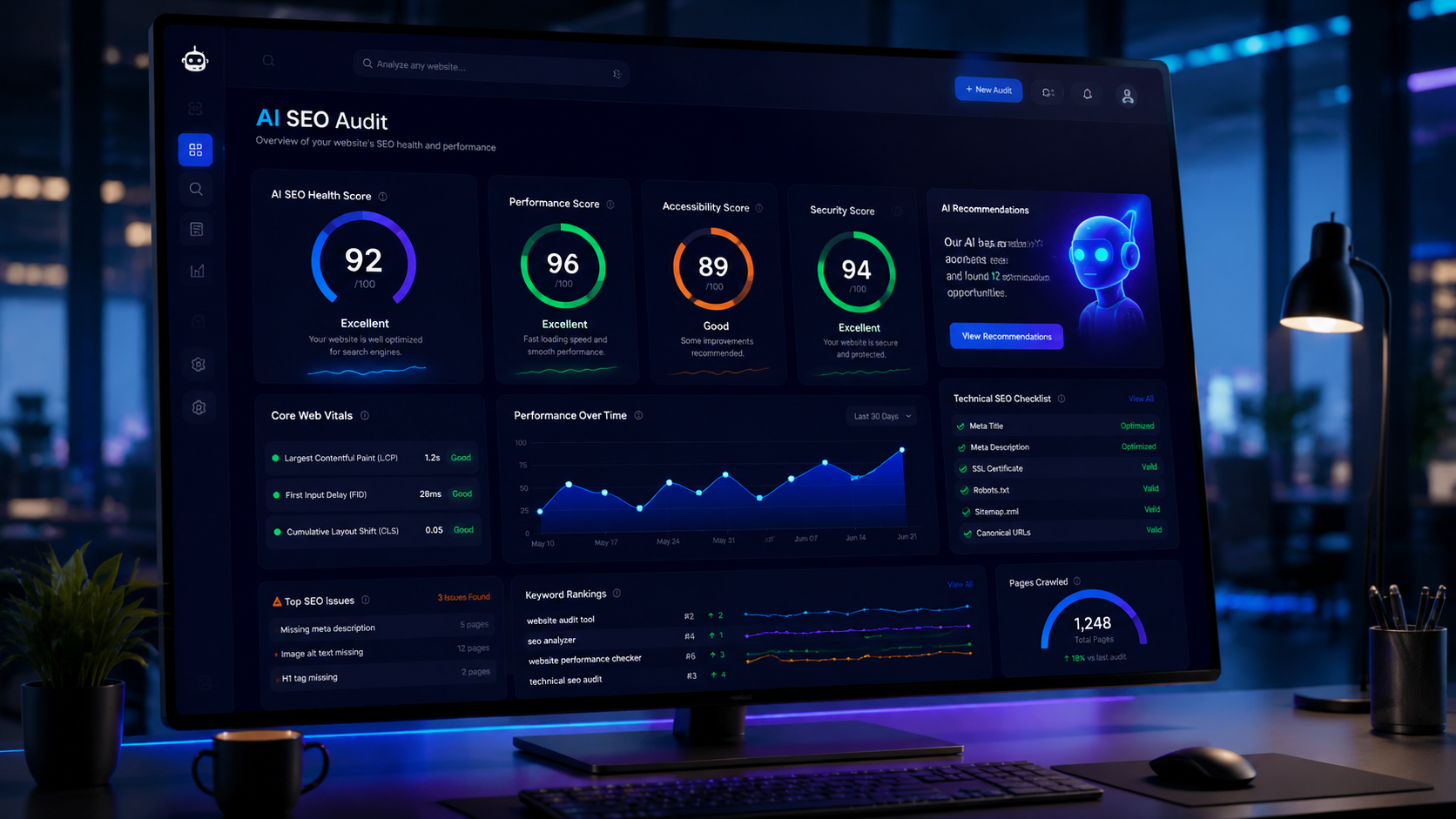
AI SEO Audit: How to Find Website Issues in Minutes (2026 Guide)
Search engines have become smarter than ever. Google now evaluates websites based on technical SEO, page speed, user experience, accessibility, mobile responsiveness, structured data, and content quality.
Manually checking every issue can take hours.
This is where an AI SEO Audit makes a huge difference.
Instead of reviewing hundreds of website elements one by one, AI-powered audit tools can scan your website in minutes and generate actionable recommendations that help improve rankings, user experience, and overall website health.
In this guide, you'll learn what an AI SEO audit is, why it matters in 2026, what it checks, and how to use it to improve your website.
What Is an AI SEO Audit?
An AI SEO audit is an automated website analysis that uses artificial intelligence to evaluate important SEO factors such as:
- Technical SEO
- Website performance
- Accessibility
- User experience
- Mobile optimization
- Metadata
- Heading structure
- Image optimization
- Internal linking
- Broken links
- Missing tags
Instead of manually searching for issues, AI identifies them quickly and prioritizes improvements based on impact.
Why AI SEO Audits Matter in 2026
Google's ranking systems continue to evolve.
A website with excellent content but poor technical optimization can still struggle to rank.
An AI SEO audit helps you identify hidden problems such as:
- Slow loading pages
- Missing meta descriptions
- Duplicate titles
- Missing alt text
- Poor heading hierarchy
- Weak internal linking
- Mobile usability issues
- Accessibility violations
- Performance bottlenecks
Fixing these issues creates a better experience for both users and search engines.
What Does an AI SEO Audit Check?
A complete audit should include several categories.
1. SEO Analysis
An AI audit reviews:
- Page titles
- Meta descriptions
- Canonical tags
- Robots directives
- XML sitemap
- Heading structure
- Keyword placement
- Internal links
2. Performance Analysis
Performance directly impacts user satisfaction.
An audit checks:
- Core Web Vitals
- Page load speed
- Render-blocking resources
- Image optimization
- CSS optimization
- JavaScript efficiency
3. Accessibility Review
Accessible websites serve more users and often provide a better overall experience.
Checks include:
- Missing image alt text
- Form labels
- Color contrast
- ARIA attributes
- Keyboard navigation
- Semantic HTML
4. User Experience (UX)
AI identifies UX problems such as:
- Poor navigation
- Missing call-to-action buttons
- Inconsistent layouts
- Low readability
- Mobile responsiveness
- Touch target sizing
Benefits of AI SEO Audits
Businesses using AI website audits often experience:
- Faster issue detection
- Better search visibility
- Higher website performance
- Improved accessibility
- Increased user engagement
- Better conversion rates
- Reduced manual work
Manual Audits vs AI SEO Audits
| Manual Audit | AI Audit |
|---|---|
| Takes hours | Takes minutes |
| Human errors possible | Consistent analysis |
| Limited checks | Hundreds of automated checks |
| Difficult for beginners | Beginner-friendly |
| Expensive consultants | Affordable SaaS tools |
How to Perform an AI SEO Audit
Step 1
Enter your website URL.
Step 2
Start the automated scan.
Step 3
Review your website health score.
Step 4
Identify high-priority issues.
Step 5
Apply recommended fixes.
Step 6
Run another audit after updates.
Regular audits help track improvements over time.
Common Website Problems AI Detects
Many websites unknowingly suffer from:
- Duplicate page titles
- Missing H1 headings
- Broken internal links
- Large uncompressed images
- Slow page speed
- Accessibility violations
- Missing Open Graph tags
- Weak metadata
- Poor mobile usability
- Missing structured data
These issues often reduce search visibility without website owners realizing it.
Best Practices for Better SEO
Follow these recommendations:
- Use descriptive page titles.
- Write unique meta descriptions.
- Compress images.
- Add alt text.
- Improve page speed.
- Fix broken links.
- Use proper heading hierarchy.
- Keep URLs clean.
- Ensure mobile responsiveness.
- Run regular website audits.
Why Continuous Auditing Matters
SEO is not a one-time task.
Every website update can introduce new technical issues.
Running regular AI audits helps maintain:
- Better rankings
- Faster pages
- Stronger accessibility
- Improved user experience
- Healthier technical SEO
Audit Your Website with AuditWebAI
If you're looking for a fast way to identify SEO, performance, accessibility, and user experience issues, AuditWebAI provides an AI-powered website audit that analyzes your site in minutes.
Simply enter your website URL, review your audit report, and start fixing the issues that matter most.
Regular audits can help you improve your website's overall quality and create a better experience for both users and search engines.
Frequently Asked Questions
Is an AI SEO audit better than a manual audit?
AI audits are much faster and can identify hundreds of technical issues automatically. Manual reviews are still useful for content strategy and advanced SEO analysis.
How often should I run an AI SEO audit?
For active websites, running an audit every month—or after major updates—is a good practice to catch new technical issues early.
Can an AI SEO audit improve Google rankings?
An audit itself doesn't improve rankings, but fixing the issues it identifies can strengthen your site's technical SEO, performance, and user experience, which are all important ranking factors.
Does an AI SEO audit check website speed?
Yes. Most AI audit tools analyze performance metrics such as page speed, resource optimization, and loading efficiency.
Final Thoughts
AI SEO audits have become an essential part of maintaining a healthy website in 2026.
By identifying technical SEO issues, performance bottlenecks, accessibility problems, and UX improvements in minutes, AI-powered tools save time while helping you build a stronger online presence.
Whether you're a business owner, marketer, developer, or SEO professional, running regular website audits is one of the easiest ways to keep your site optimized for both users and search engines.