Why a Website Audit in 2026 Isn't Just About Google Anymore
Ranking on Google used to be the whole game. Not anymore. In 2026, people are finding businesses through ChatGPT, Perplexity, and Google's AI Overviews just as often as they are through a traditional search results page. If your site isn't structured for both humans and AI crawlers, you're losing traffic you don't even know you're missing.
That's why every AI website audit tool worth using today checks two things at once: classic technical SEO health, and how "readable" your site is to large language models. This guide walks through exactly what to check, in what order, and how to fix the most common issues fast.
What a Modern Website Audit Should Actually Cover
A real audit isn't just a broken-link scanner. Here's the full checklist we recommend running on any live website, whether it's an e-commerce store, a SaaS landing page, or a local service business site.
1. Technical SEO Foundations
- Crawlability — robots.txt and XML sitemap are correctly configured
- Indexing status — pages aren't accidentally blocked with noindex tags
- HTTPS and mixed-content errors
- Broken internal and outbound links (404s)
- Duplicate title tags and meta descriptions
- Mobile responsiveness across breakpoints
2. Core Web Vitals & Site Speed
Page speed remains a direct ranking factor and a major driver of bounce rate. Focus on three metrics: Largest Contentful Paint (LCP), Interaction to Next Paint (INP), and Cumulative Layout Shift (CLS). Compress images, lazy-load below-the-fold content, and minimize render-blocking JavaScript to move these numbers in the right direction.
3. On-Page SEO
- One clear H1 per page, with logical H2/H3 structure underneath
- Focus keyword present in the title, first 100 words, and at least one subheading
- Descriptive alt text on every image
- Internal links connecting related pages (this alone can lift rankings within weeks)
4. AI Search Visibility (the part most audits still skip)
This is the newest and fastest-growing category of website auditing. AI answer engines don't "rank" pages the way Google does — they extract and cite content. To be citation-ready:
- Write clear, direct answers near the top of each page (AI models favor extractable, self-contained statements)
- Use structured data (schema markup) so entities and facts are machine-readable
- Keep content factually consistent across your site — contradictions hurt AI trust signals
- Build topical authority with interlinked content clusters instead of isolated one-off pages
Common Mistakes That Quietly Kill Rankings
Most sites don't lose traffic from one big mistake — it's usually a handful of small, unnoticed ones stacking up:
- Thin content pages with under 300 words competing for competitive keywords
- No internal linking strategy, leaving orphan pages with zero authority passed to them
- Meta descriptions left blank, so Google auto-generates a weak snippet
- Images uploaded at full resolution instead of compressed WebP formats
- No schema markup, making it harder for AI engines to understand what the page is actually about
How to Run This Audit in Minutes, Not Hours
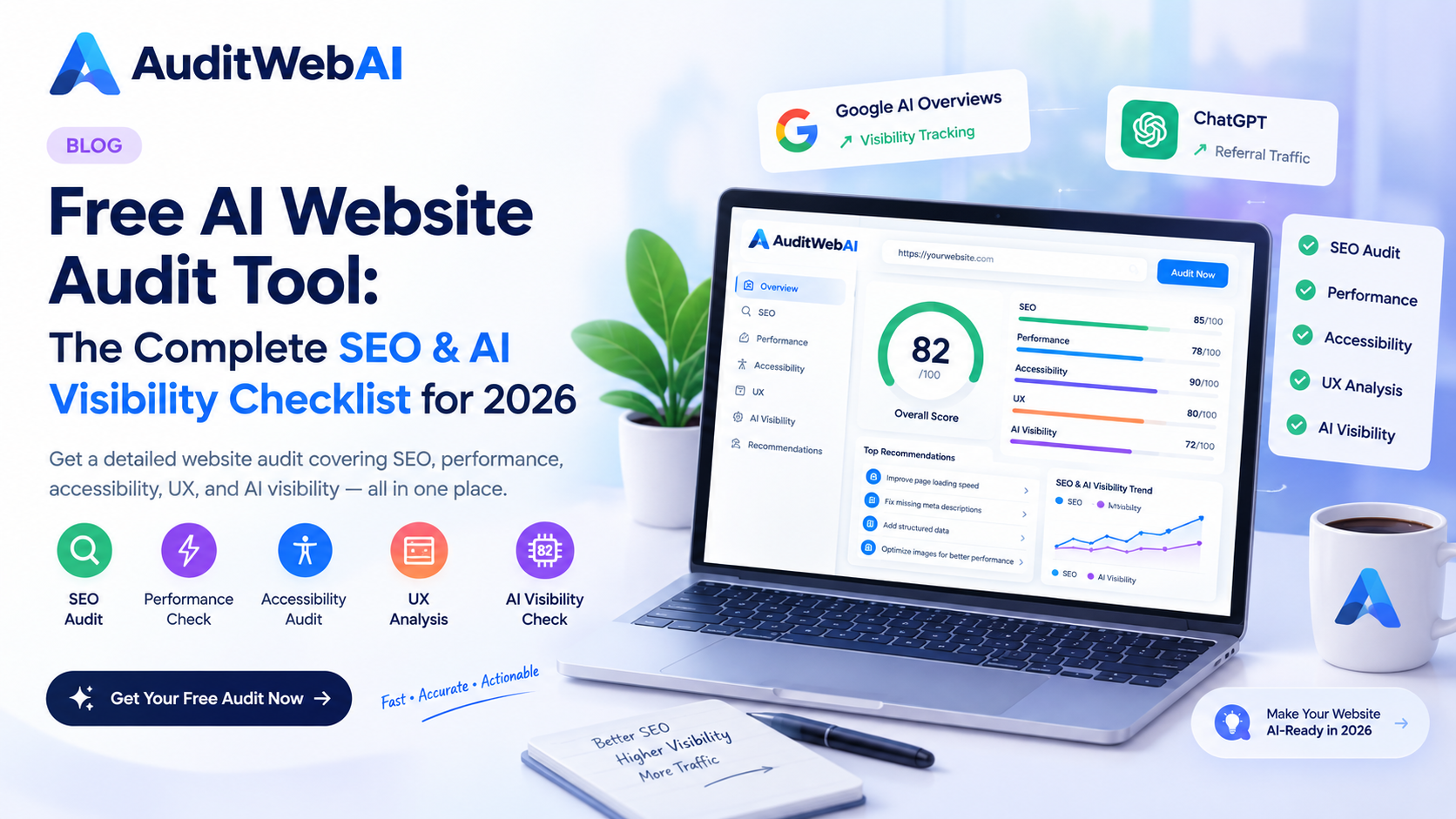
Manually checking all of the above across a full website can take days. This is exactly the gap AuditWebAi was built to close — it scans a site, scores technical SEO, Core Web Vitals, and AI visibility together, and returns a prioritized fix list instead of a wall of raw data.
If you want to see where your own site stands, run a free scan on the AuditWebAi homepage — it takes under a minute and flags the highest-impact issues first.
A Simple 30-Day Fix Priority Order
- Week 1: Fix crawlability and indexing issues — nothing else matters if pages can't be found
- Week 2: Resolve Core Web Vitals issues, starting with image compression and render-blocking scripts
- Week 3: Rewrite thin or duplicate meta titles/descriptions across top pages
- Week 4: Add internal links between related pages and implement schema markup on key pages
Final Thoughts
Search behavior has split into two paths — traditional Google results and AI-generated answers — and a site that only optimizes for one is leaving growth on the table. Run a full audit on a fixed schedule (monthly is a good baseline for active sites), fix issues in priority order, and track whether organic impressions move after each round of fixes.
Want the fastest way to see exactly where your site stands on both fronts? Try AuditWebAi's free audit and get a prioritized report in under 60 seconds.